Overview
Val immersive spaces is about transforming virtual experiences with 360° and VR technology - tailoring Apple’s scanning and layout tools for real interiors. Dexis worked with the team to adapt the standard room-capture flow so it can handle intricate room shapes, varied furniture, and demanding spatial scenarios without losing clarity for end users.
Challenge
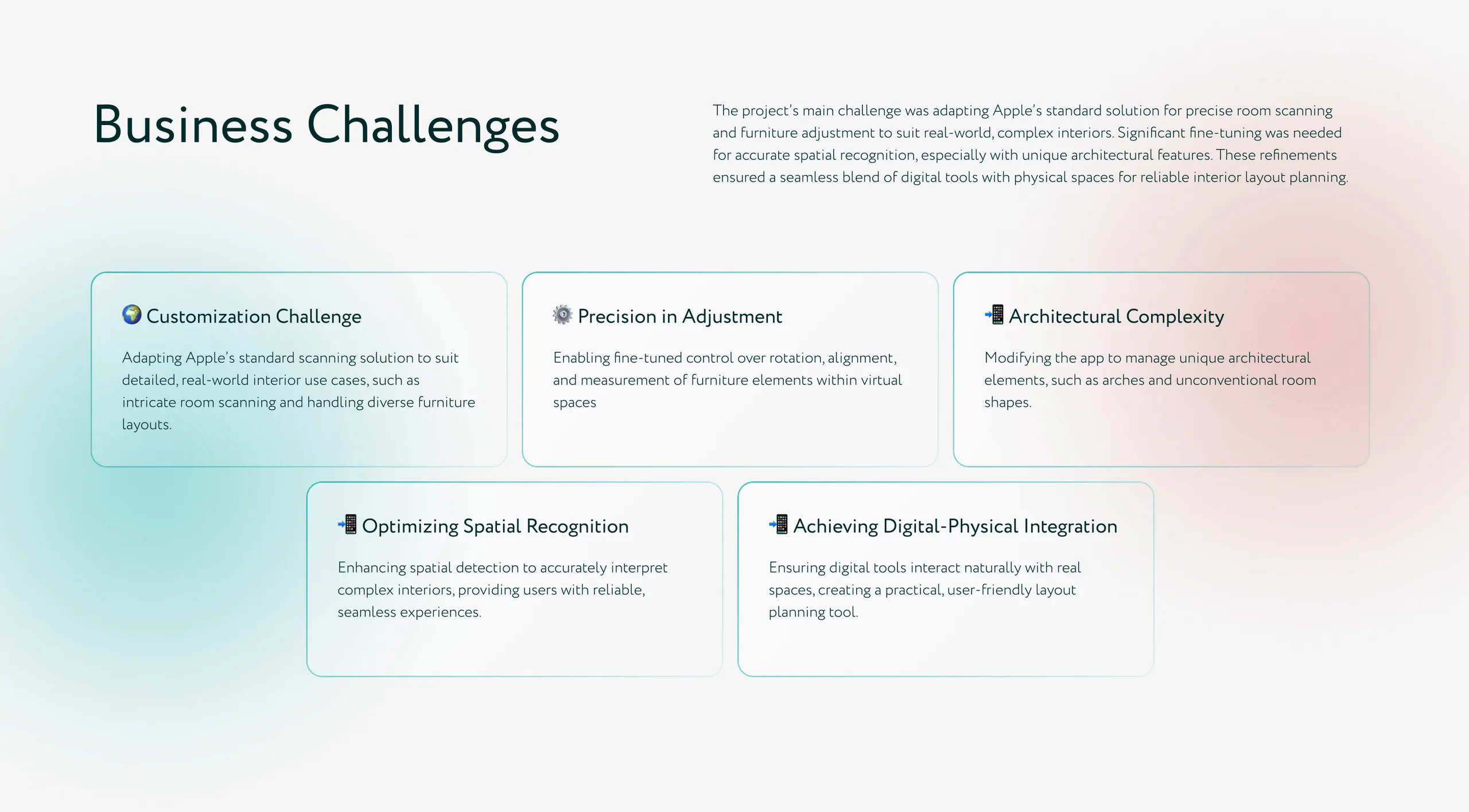
The core challenge was to take Apple’s baseline solution for room scanning and furniture adjustment and stretch it into complex, real-world spaces: accurate spatial recognition where architecture is irregular (arches, non-rectangular rooms), furniture is dense and diverse, and users still expect precise alignment, rotation, and measurement in the virtual twin of the room.
Experience & interaction
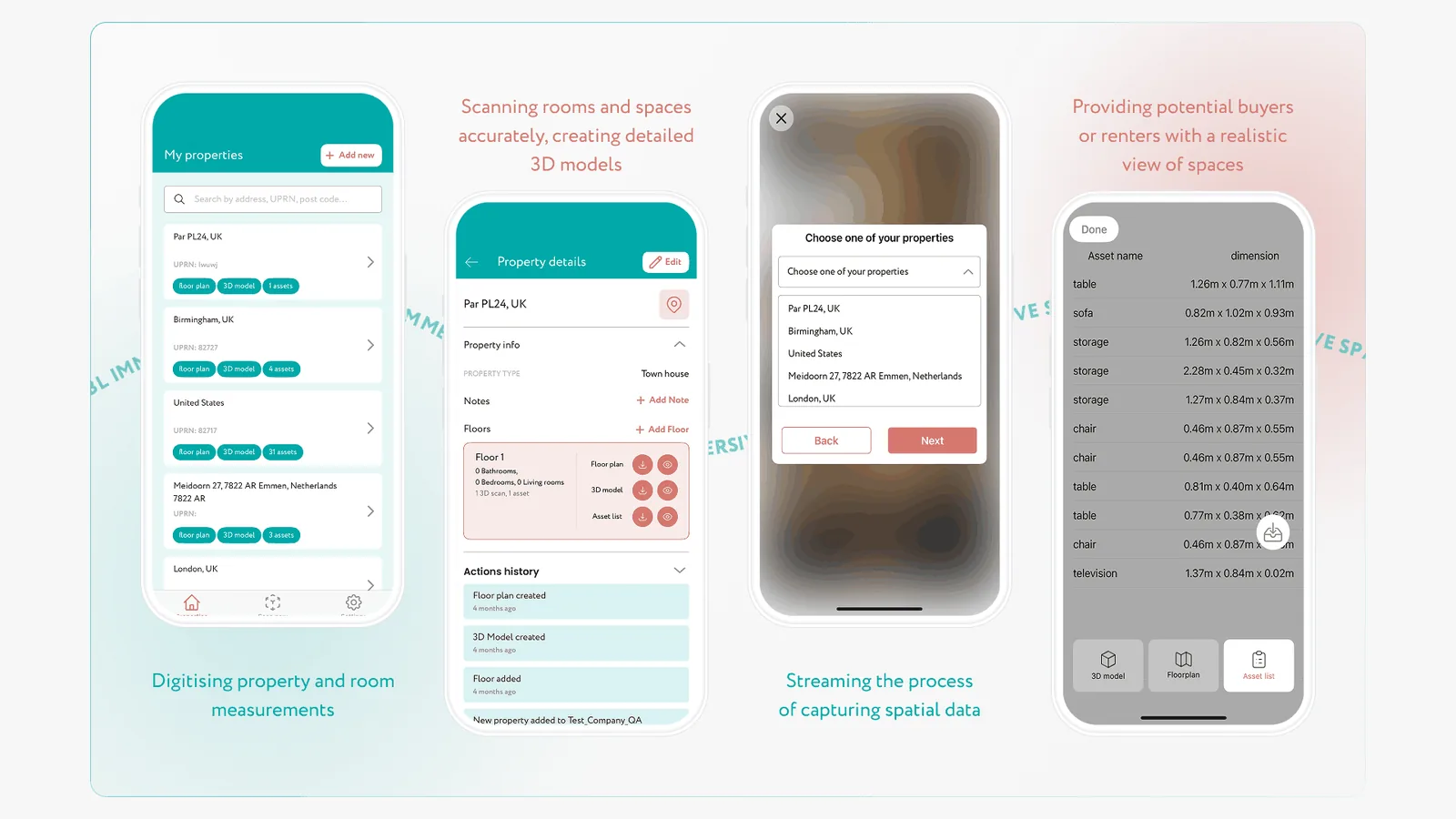
We focused on customisation for real-world interiors - so scanning remains usable when layouts are messy and furniture is not uniform. Precision in furniture adjustment mattered just as much: fine control for aligning, rotating, and measuring pieces inside the digital representation of physical space. Where standard flows broke down, we addressed architectural complexity so the app could cope with features like arches and unconventional outlines while keeping the experience predictable.
Engineering
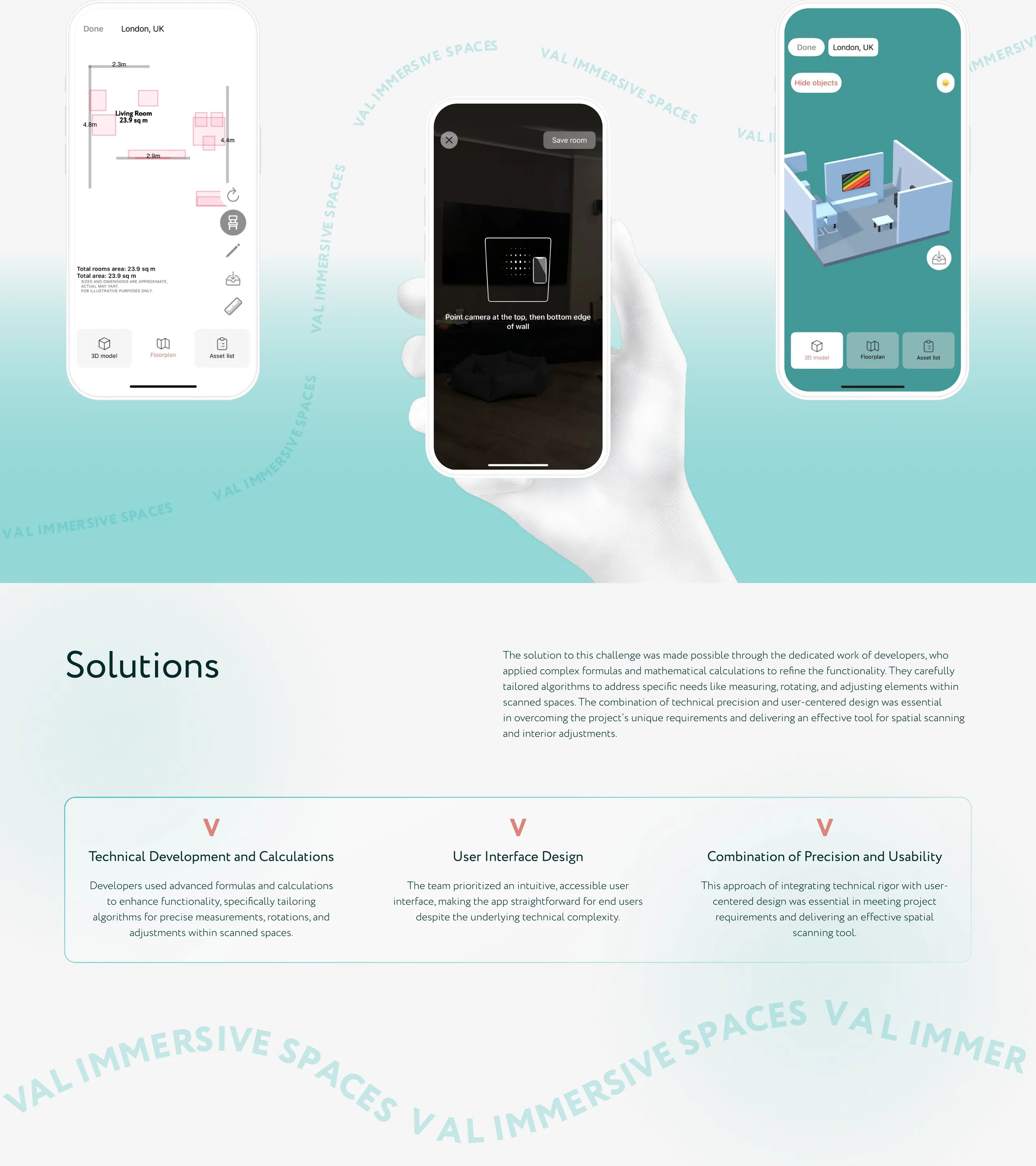
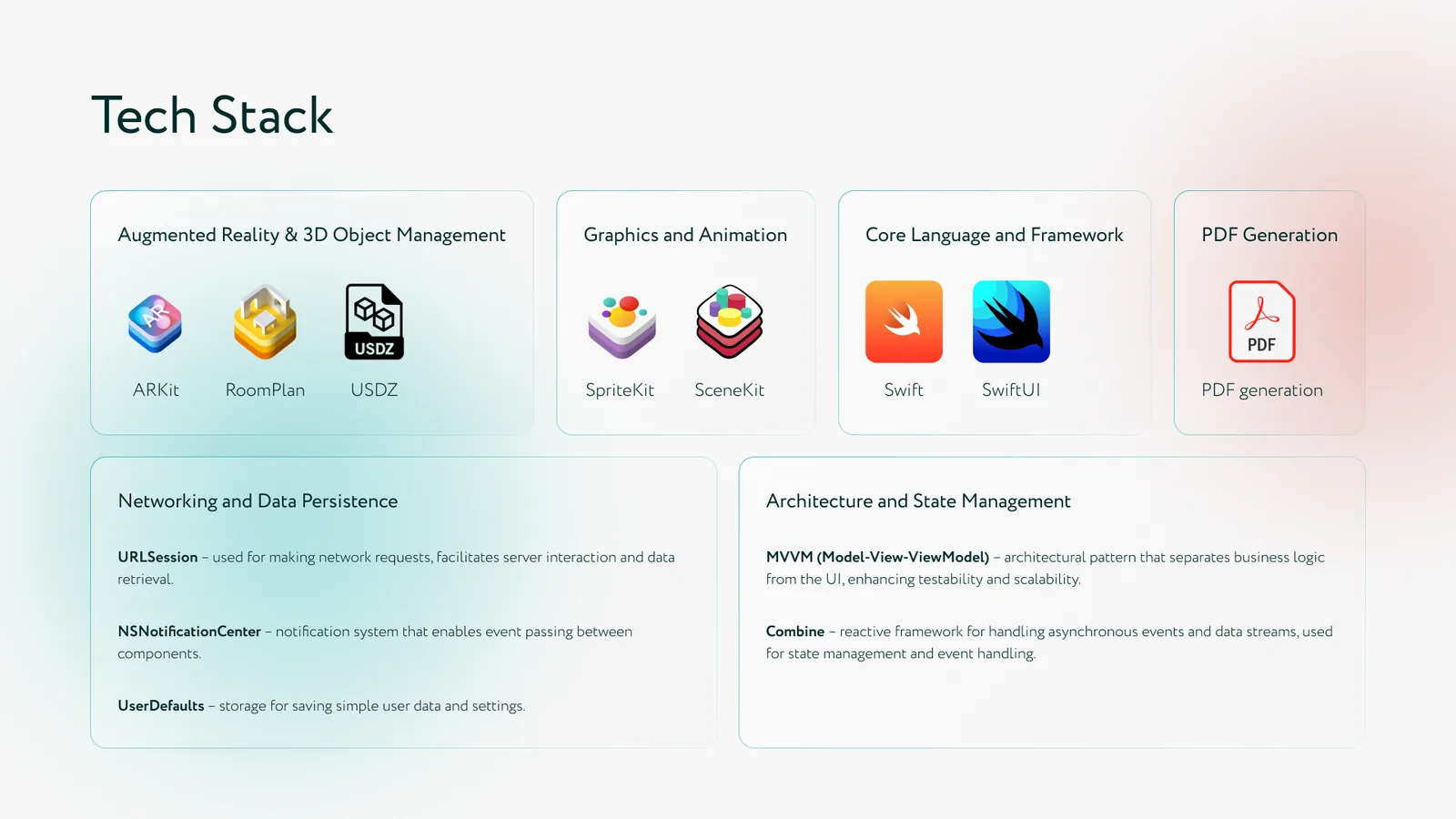
Delivery relied on developers applying rigorous formulas and mathematical models to refine behaviour - tailoring algorithms for measurement, rotation, and adjustment inside scanned volumes. Alongside that, we prioritised an intuitive, accessible interface so complexity stayed under the hood: users get straightforward controls even when the underlying spatial logic is heavy. Combining technical precision with user-centred design was what made the tool viable for reliable interior layout planning.
Outcome
The result is a spatial experience that bridges digital and physical environments: stronger spatial detection in difficult interiors, controlled furniture manipulation in VR, and a product direction that can evolve as scanning and platform capabilities grow.
Launch-ready delivery
We supported structured validation on critical flows, clear handover notes, and boundaries between platform capabilities, custom algorithms, and UI so Val’s team can extend the product confidently as hardware and OS APIs evolve.